No one trusted the system to keep them safe.
One missing fee, one wrong disclosure, one outdated document could trigger triple-damages lawsuits. Regulators were circling, legal was sounding alarms, and property managers were didn't have a system in place for fees, policies, and disclosures to be applied safely at scale.
Existing processes slowed operations
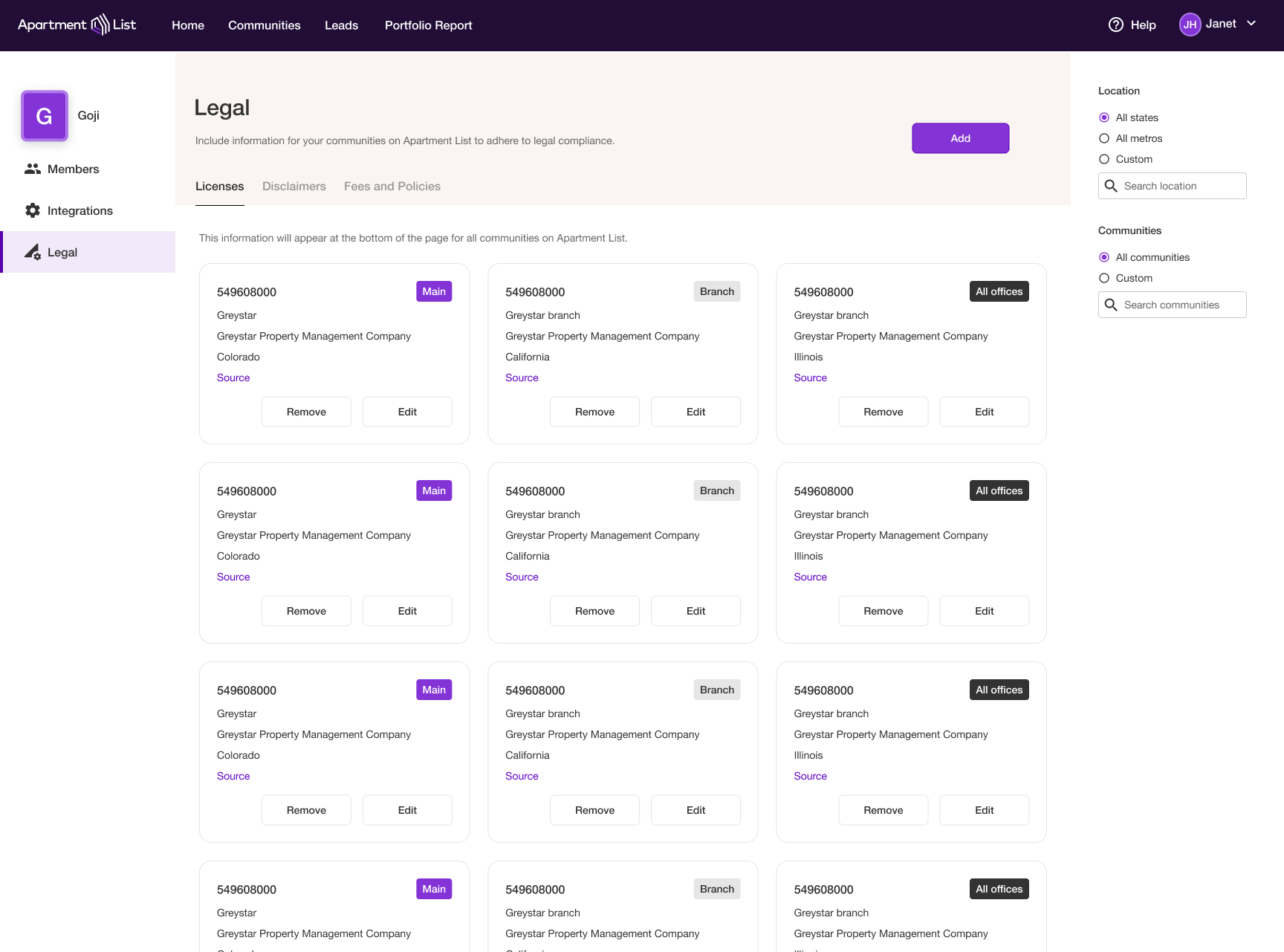
Compliance wasn’t just a feature; it was a liability. Property managers were overwhelmed, juggling state, city, and community rules manually. Errors meant high legal risk and potential revenue impact. Existing processes created frustration and slowed operations, threatening partner trust.
Impact
20% ↓
Risk drop
40% ↓
Audit prep decreased
✧˖°
Trust in being covered.
I owned the product strategy and design direction for turning compliance from a liability into a strength.
That meant deciding how to normalize wildly different state regulations, designing a system that scaled across every property level, and creating templates that made legal airtight without overwhelming users.
A single, central place where partners could stay safe without slowing down built around 3 pillars.
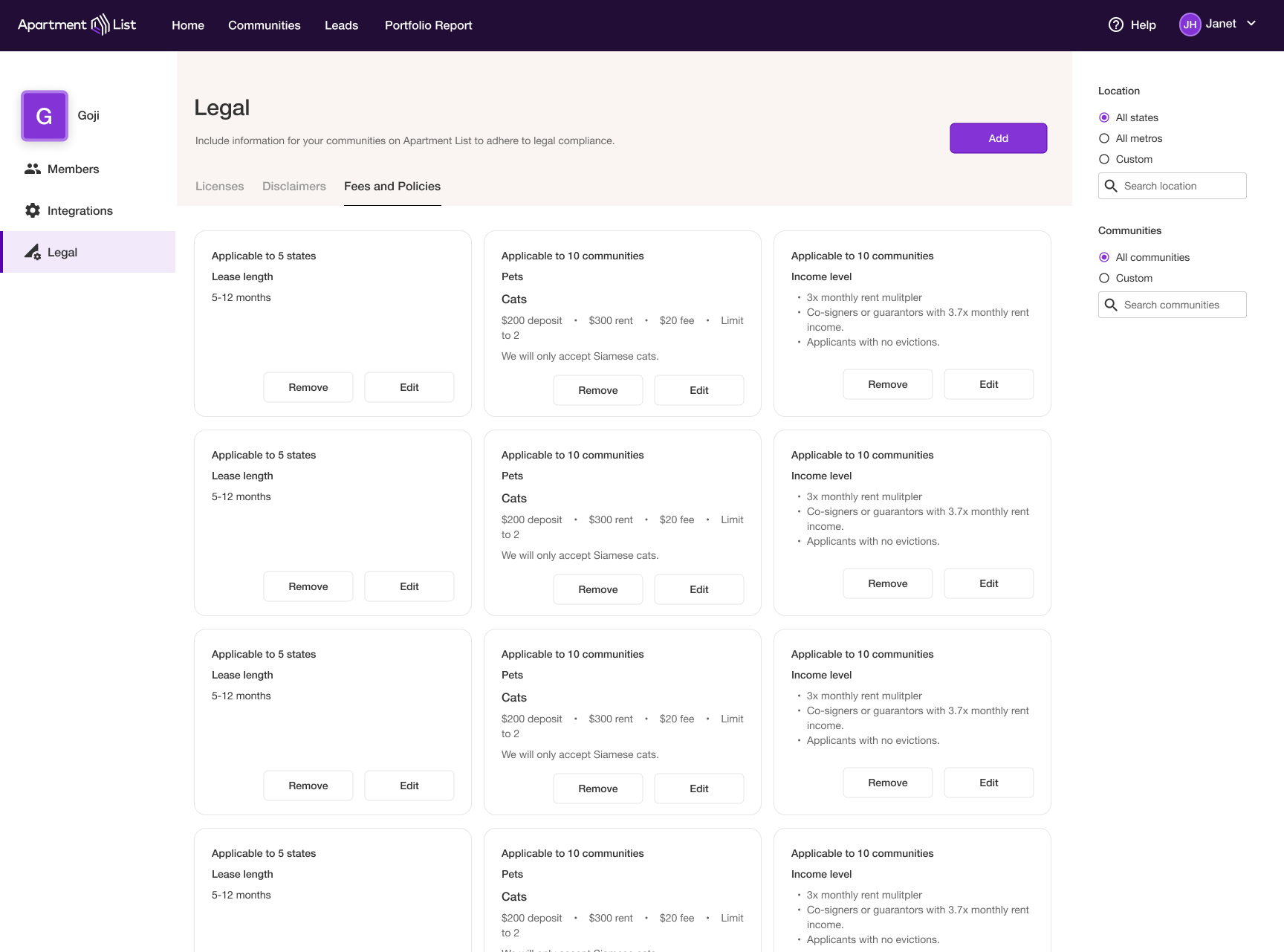
Property managers need to make bulk edits across different levels: state, city, and community.
Early prototypes revealed what wouldn’t scale. 1:1 edits were a dead end and dynamic based on selections was a technical fantasy.
○ Risk adoption based on prominence.
○ Optimize for speed.
○ Optimize for speed.
○ Extra step that would increase friction.
○ Doesn't highlight a one stop place to edit it again.
○ Introduces a new drawer pattern.
○ Doesn't highlight a one stop place to edit it again.
○ Introduces a new drawer pattern.
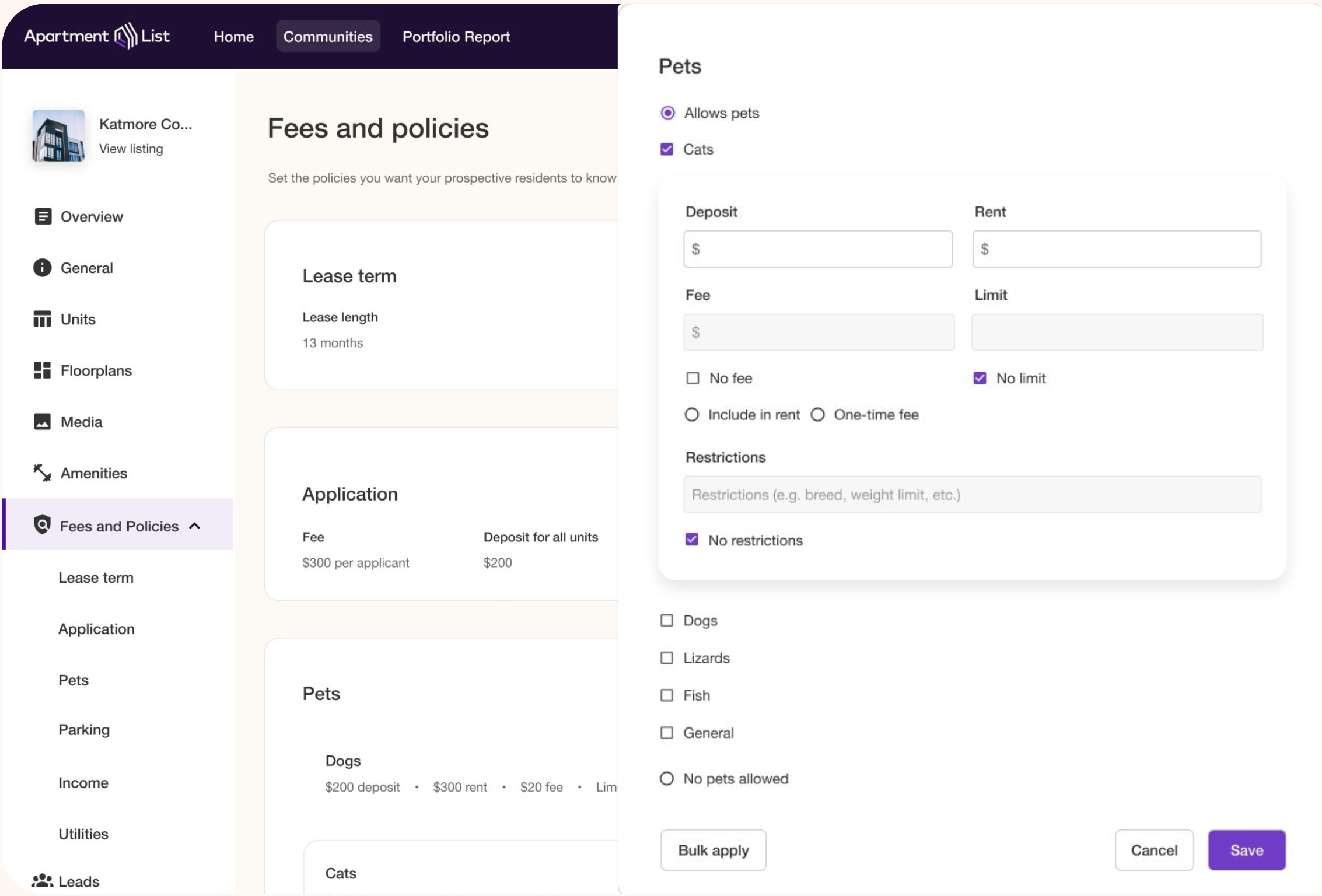
○ Progressive disclosure solves granularity.
○ Optimize for scalability.
○ Optimize for scalability.
○ Not technically feasible to pull in regs to flag issues.
○ Too clever for its use case.
○ Introduces new drawer pattern.
○ Too clever for its use case.
○ Introduces new drawer pattern.
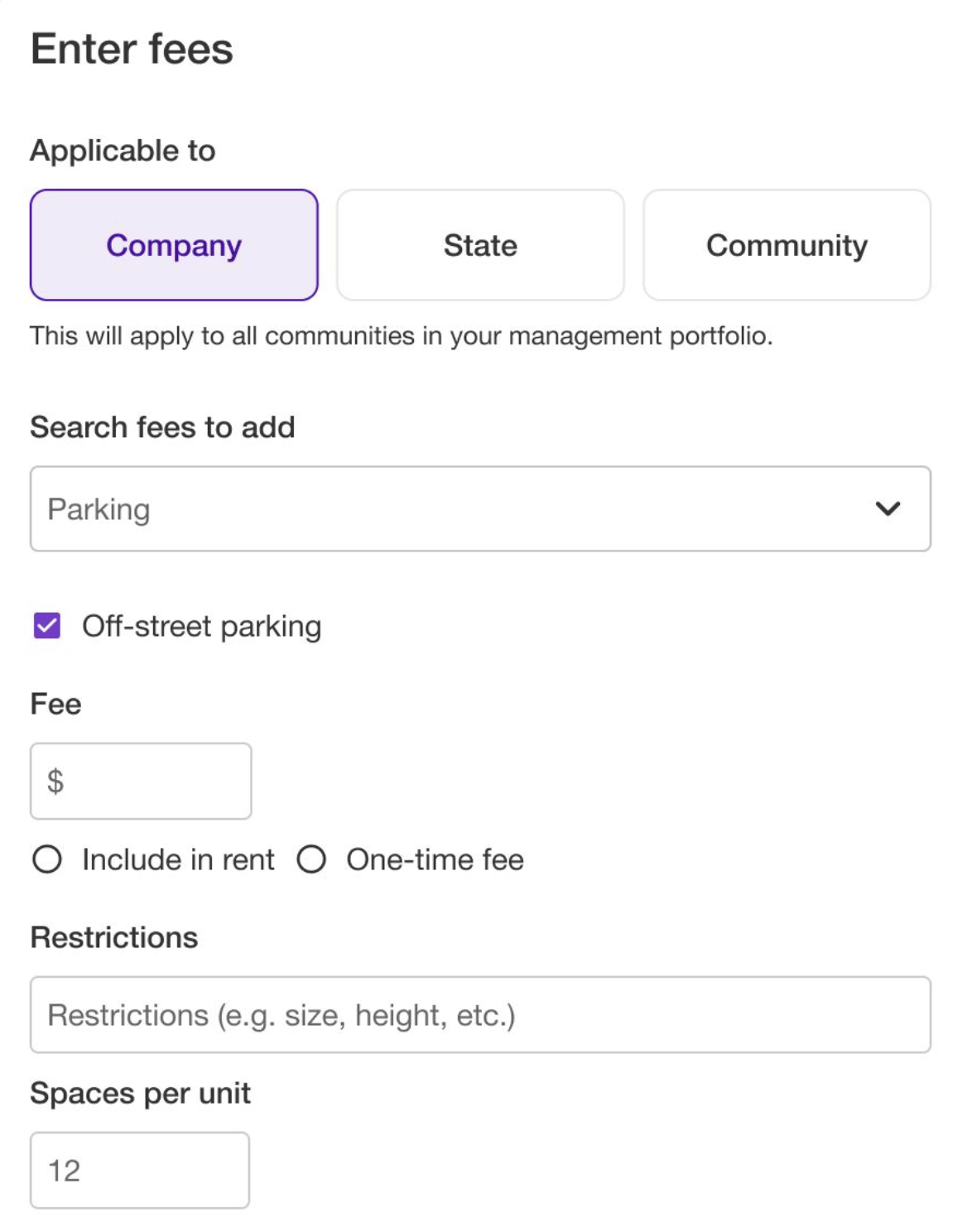
Declutter to clarity in one beat.
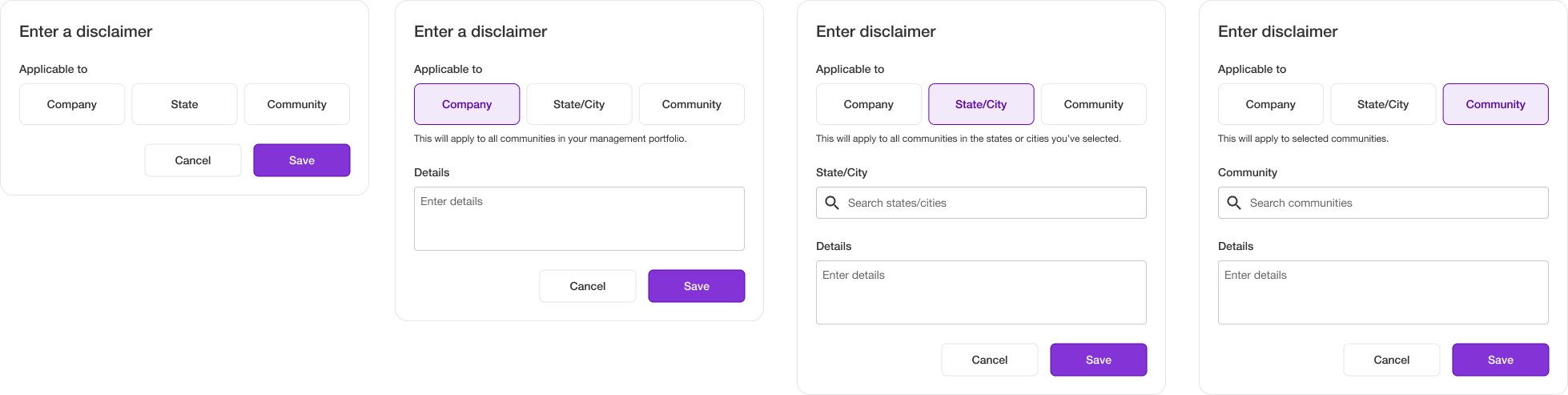

Visible fees needs to be clear and transparent to make confident decisions.
Since we already had supplementary research on renters' expectations. The goal was to determine what can we solve for now and the future. Leadership approved of "Ask for price" based on speed despite conversion risk.
○ Optimize for speed.
○ Least tech work.
○ Least tech work.
○ Conversion risk.
○ Leadership approved of the risk.
○ Leadership approved of the risk.

○ Increases adoption by visibility.
○ Compliant with regulation.
○ Compliant with regulation.
○ Increase tech work.
○ Leadership flagged more pressing priorities.
○ Leadership flagged more pressing priorities.

"Now I can make bulk updates confidently, and I actually trust the system to keep us compliant."
Property managers gained confidence managing fees, disclosures, and regulations, while renters engaged more with transparent pricing. By shipping high-impact templates, bulk edits, and clear workflows and cutting infeasible features, we delivered measurable business value immediately while laying the foundation for long-term scale.
"Finally, I can set up fees and disclosures without triple-checking every step. It just works."
"I actually feel in control now. Before this, compliance was a constant stress."
"I like the templates, but some of the state rules feel buried. I have to hunt to be sure I’m covered."
Impact
20% ↓
Risk plummetted
40% ↓
Audit prep decreased
✧˖°
Trust in being covered.